Thursday, 26 May 2016

Goose Eggs

Our neighbour gave us a brace of goose eggs.


The goose eggs are significantly bigger than a hen's egg; 175g to 60g. The shells are very thick too - I scored around with a serrated knife before cracking. Out of interest, I weighed the shells; 20g to 5g.


The goose egg yolk is very large in relation to the white, giving an even yellower colour to the whisked eggs.


We've never eaten goose eggs before, so put one of them into a quiche, with asparagus and leeks from the Yorkshire garden, and supplemented with a couple of our hen's eggs. I wondered if they might taste a bit "gamey" but couldn't taste and difference. Delicious!

Saturday, 21 May 2016

A Flock in the Field

We arrived home to find a flock of Swaledale sheep in the field!


The previous owners had an arrangement with a local farmer to graze his flock here, and until we're in a position to put our own animals on the land, it makes sense for us to continue. He's going to teach us a bit about shepherding in return. I tried to count, but they wouldn't stay still, so our best estimate is 10 ewes and 21 lambs.


* with apologies to Kenny Rogers and Lucille

April in the Garden

When looking at a property to buy, the land was our most important consideration. Without a decent plot upon which to grow food, and raise animals, our project would not be viable. Sellers would be keen to show off their interior decoration, but we'd be itching to pull on our boots and take a spade to the soil. We rejected beautiful properties because the land was too boggy, too high elevation, too shaded, or just far less area than was advertised.

The Ladybird Farm is just right. The house is perfect for our needs, and the 4 acre field is ideal. What we weren't expecting, was a beautiful garden. It wraps right around the house, with most being on the east and south sides. It has been well tended, and there has been something in flower every month, so far. We are going to follow the usual advice and not make any major changes to the garden in the first year; we'll wait and see what comes up. We're going to record here what there is, month by month. There are a few plants we don't recognise, so any suggestions on plant names, or even varieties, will be much appreciated.

April in Teesdale, and there are plenty of daffodils still in flower (in Yorkshire they're pretty much over). There are some still in bud, too. I've counted more than 20 varieties, and plenty tucked away, ripe for cutting and having in the house.


 The pond is blooming, though the pump has given up the ghost. The pond is a future project for us.


 Anyone have an idea what this plant is?


Still plenty of drumstick primula in flower; many shades of purple.


 We have a beautiful yellow daisy; again, can anyone name the plant, please?


There are lots of primula around the house, interspersed with miniature daffodils and crocuses.


We have a medlar tree (commonly known as devil's a**e; if we get fruit, I'll show you why, later!). Looking forward to collecting fruit from this.


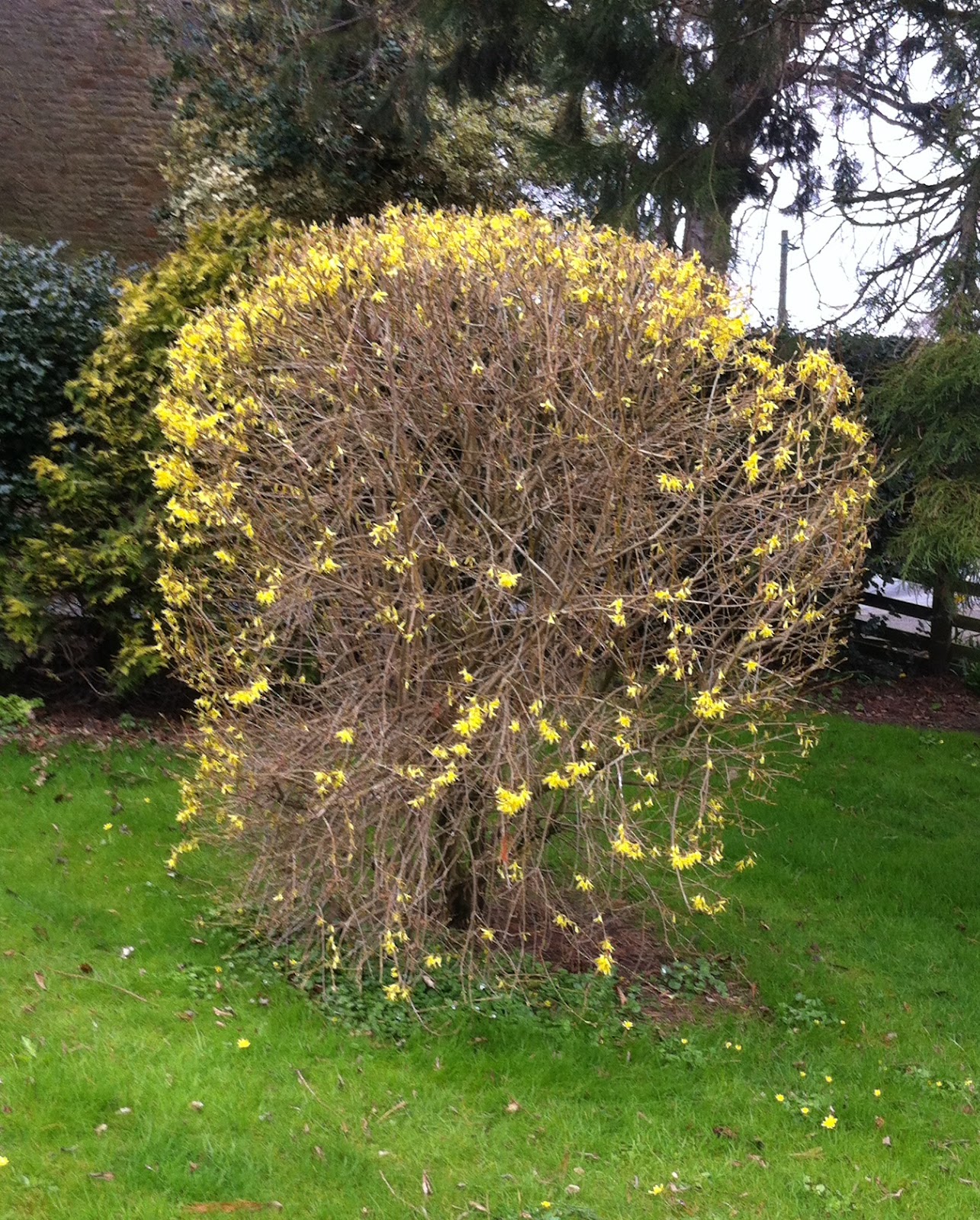
 Flowering currant in the walled garden, and a forsythia by the front gate. I'm not a huge fan, but they are out of the way, so stay for now.


Saturday, 14 May 2016

Addicted to Sheep


This film, being repeated this week, is the story of The Hutchinson family, who are tenants on a sheep farm not far from us in Teesdale. The comments from the children in Forest of Teesdale school (a tiny village school, which has recently been saved from threat of closure) are extremely perceptive. Highly recommended. 

BBC 4, Wednesday 18 May at 8pm BST, and on the BBC iPlayer for 28 days. 

Wednesday, 11 May 2016

Heilan' Coos

We've had several questions asking about the livestock that we'd like to keep. Poultry is an obvious first choice. Prof Brian Cockerel and his ladies will almost certainty be joining us, and we'd like to keep quail and guinea fowl. Oooh, and geese for Christmas.

As for mammals, more pigs would be good; Oxfords or Gloucesters are known meat breeds, with happy temperaments.

But when it comes to cattle, Simon is decided - a Highland is at the top of his list. So fancy, walking along the riverbank in Yorkshire, but what should hove into view than these beauties. My favourite is the calf (with the horns of his mum just visible). As a bonus, those horns will be just great for winding skeins of wool.


Monday, 25 April 2016

Exploring Middleton in Teesdale

Middleton in Teesdale is a pretty market town in the North Pennines Area of Outstanding Natural Beauty (AONB).


It grew in the early 19th century after the London Lead Company located its northern headquarters there. This is commemorated with the drinking fountain, dating from 1877, presented in honour of Mr RW Bainbridge, who was superintendent of the company.


I love the tap in the shape of a hedgehog.


There are 2 pubs, The Teesdale Arms, serving local ales, and traditional food, and The Forresters, a French restaurant, which has regular themed evenings, such as crepes or moules.


There are several cafes; our favourite is  Cafe 1618, where we've had lunch and coffee.


It has its "bistro at the back", Number 17, which we're looking forward to trying.

Middleton is a stop on both the Pennine and Teesdale ways, and is an excellent location for walking. We have several books of walks and are designing walks of our own.

Saturday, 9 April 2016

A Weekend of Firsts

Over Easter we had our first guests, who arrived bearing gifts of food and drink. We had a most enjoyable weekend exploring the local area, and an evening around the Aga, with the young people beating us at Articulate.

After a hearty breakfast of Yorkshire sausages and bacon, with scrambled eggs from our hens, Simon was out building our first vegetable bed. We have a small walled garden right next to the house, which the previous owners probably used for fruit and vegetables, but appears to have been left fallow for some years. It's now slightly overgrown, but is ideal for a bit of experimental vegetable growing.


Our house in Yorkshire is less than 20' above sea level; Ladybird Farm is over 750' and 80miles further north, so a different prospect for growing. The soil here is heavier than the silty sandy loam we had in Yorkshire. It's full of stones when you dig more than a spade's depth, so root vegetables such as parsnip and carrot may be a challenge.


Using canes and chicken wire left by the previous occupants, Simon built a small rabbit-proof cage, and planted a handful of broad beans. Known as Frank's Winter Beans, these are a variety selected over the years by our neighbour, and have been extremely hardy.


Seeds were planted and we look forward to our first crop, and this delicious crushed broad bean recipe, delicious with pork, sausages, or as a vegetarian dish.